How to Choose the Right Roof Ventilation System for Your Home
Picture this: It’s the hottest day of summer, and your attic feels like an oven. Or maybe it’s the dead of winter, and you spot mysterious moisture stains creeping across the ceiling. Both are warning signs that your roof’s ventilation might not be pulling its weight.
At Independent Roofing, we know that proper ventilation is more than just a “nice-to-have.” It’s a silent protector—keeping your home or small business comfortable, energy bills in check, and your roof in top shape year after year.
Why Roof Ventilation Matters
A roof without good ventilation is like a car with no radiator. Overheating and breakdowns are just a matter of time.
The Big Three: What Ventilation Does
- Regulates Temperature: Moves hot air out in summer and helps prevent ice dams in winter.
- Controls Moisture: Keeps condensation from turning your attic into a petri dish for mold.
- Extends Roof Life: Reduces stress on shingles, underlayment, and structure.
The right system can lower your energy bills, improve indoor comfort, and help prevent costly emergency roofing repairs down the road.
Types of Roof Ventilation Systems 🏠
There’s no one-size-fits-all solution. The right choice depends on your roof’s design, attic size, and even your local climate. Here’s a breakdown of the most common systems:
Ridge Vents
- Run along the peak of your roof.
- Virtually invisible from the ground.
- Work best with continuous soffit vents for maximum airflow.
- Great for modern homes and new roof installations.
Soffit Vents
- Installed under the eaves (the underside of your roof’s overhang).
- Let cool, fresh air into the attic.
- Essential for balanced airflow—think of them as the lungs of your roof.
Gable Vents
- Placed on the exterior walls at each end of the attic.
- Allow cross-ventilation when paired correctly.
- Work well for older homes or where ridge/soffit vents aren’t an option.
Powered Ventilation
- Uses electric or solar fans to actively pull air through the attic.
- Useful in complex roof designs or areas with low natural airflow.
- Must be installed carefully to avoid pulling conditioned air from your living space.
Other Options
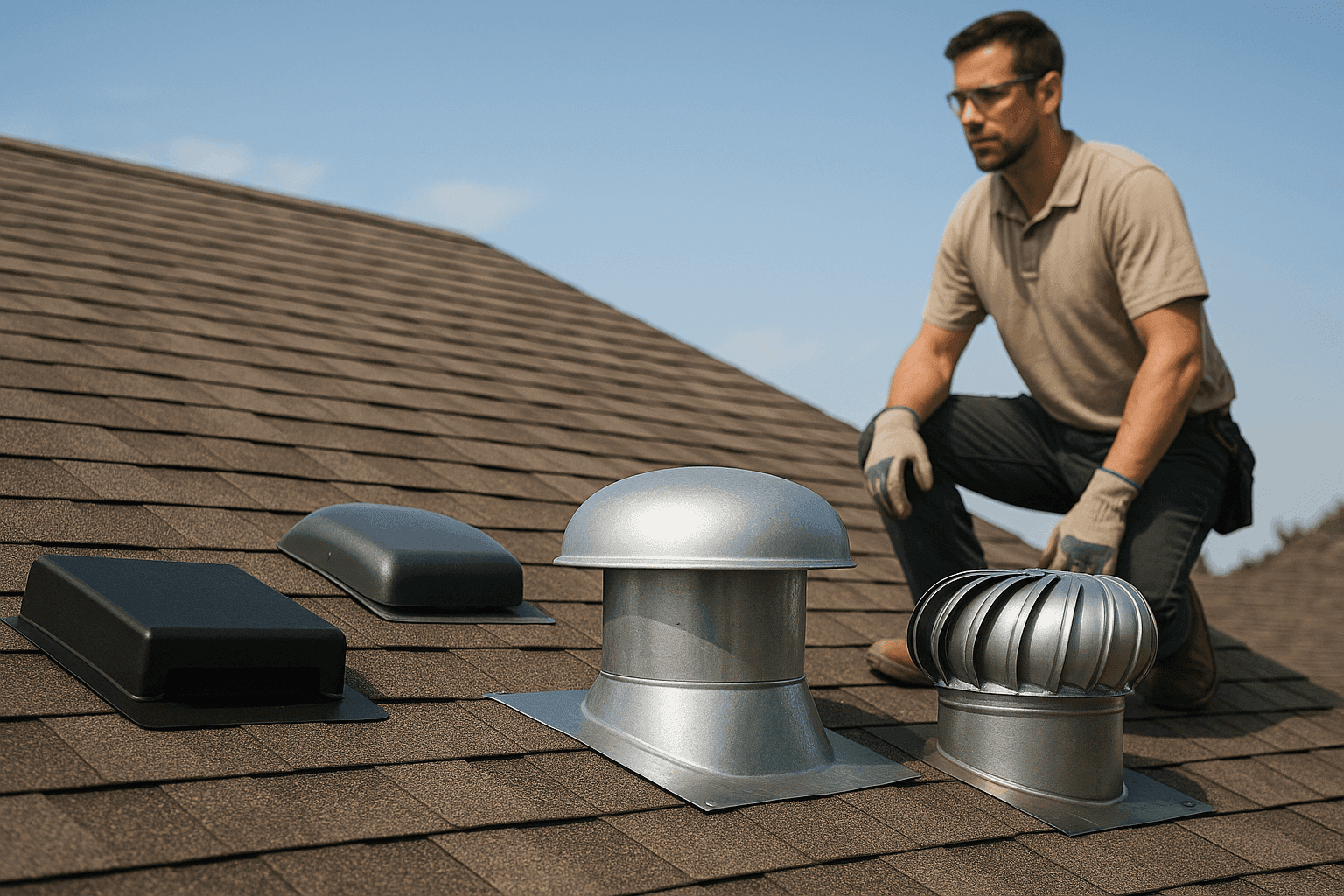
- Turbine Vents: Spin in the wind to draw out hot air.
- Cupola Vents: Decorative but functional, often used on barns or outbuildings.
- Box Vents: Simple, static vents that can supplement other systems.
How Ventilation and Insulation Work Together
Ventilation and insulation are like peanut butter and jelly—each is good alone, but together they’re unbeatable. Insulation slows down heat transfer, while ventilation lets trapped heat and moisture escape.
- Too little insulation: Heat escapes into the attic, causing snow to melt and refreeze (hello, ice dams).
- Too much insulation, not enough ventilation: Moisture gets trapped, leading to rot and mold.
The key is balance. The U.S. Department of Energy recommends at least one square foot of ventilation for every 300 square feet of attic floor space—with a mix of intake (soffit) and exhaust (ridge or roof) vents.
Quick Safety Checklist Before You Start
- Turn off attic power before inspecting or working near wires.
- Wear a mask and gloves—attics can be dusty, dirty, and full of insulation fibers.
- Watch your step—walk only on joists or boards, never directly on insulation or drywall.
- Check for pests—bees, wasps, or rodents sometimes make attics home.
- If you’re unsure or spot mold, call a professional. Health and safety first.
DIY or Call a Pro? 🛠️
Some ventilation fixes are simple, like clearing blocked soffit vents or adding insulation baffles. But when it comes to cutting holes in your roof or wiring powered vents, the stakes get higher.
DIY-Friendly Tasks
- Cleaning existing vents.
- Checking for obvious blockages (like insulation, paint, or debris).
- Replacing vent screens.
Leave to the Pros
- Installing new ridge, gable, or powered vents.
- Addressing structural issues, rot, or mold.
- Ensuring compliance with building codes and fire safety standards (see International Residential Code Section R806).
If in doubt, reach out to a licensed roofing contractor—especially if you need emergency roofing services after a storm or sudden leak.
What Pros Do On Arrival
When you call Independent Roofing, here’s what you can expect:
- Comprehensive Inspection: We’ll check attic airflow, insulation levels, and look for signs of moisture or heat buildup.
- Ventilation Assessment: Using airflow calculations and sometimes thermal imaging, we’ll determine what’s working and what isn’t.
- Recommendations: We’ll suggest the best system for your roof type, budget, and goals—whether that’s new soffit vents, a ridge vent upgrade, or powered options.
- Safe, Code-Compliant Installation: All work is performed to meet or exceed national building codes and manufacturer guidelines.
Maintenance & Preventative Tips
Good ventilation isn’t “set it and forget it.” Here’s how to keep things running smoothly:
- Inspect vents every spring and fall.
- Clear away leaves, nests, and debris.
- Check for signs of water stains or mold in the attic.
- Replace damaged vent covers or screens.
- Schedule a professional inspection every few years—especially after storms.
Regular maintenance helps you avoid emergency roofing headaches and keeps your investment protected.
Costs & Time Factors
Roof ventilation system costs vary widely. Here’s what affects the price and timeline:
- Type of vent: Ridge and powered vents cost more than static or soffit vents.
- Roof complexity: Steep, multi-level, or older roofs may require more labor.
- Additional repairs: Fixing rot, mold, or insulation adds to the scope.
- Time: Simple vent installs can take a few hours. Full upgrades or repairs may need a day or two.
Remember: investing in proper ventilation now can save thousands in energy costs and roof repairs later.
When It’s an Emergency
Some ventilation issues can’t wait:
- Sudden leaks after a storm.
- Visible mold or water stains spreading quickly.
- Extremely high attic temperatures threatening HVAC or wiring.
If you’re facing any of these, call for emergency roofing help right away. Delays can lead to bigger, more expensive problems.
FAQ: Roof Ventilation
How do I know if my attic has enough ventilation?
Look for signs like musty odors, high energy bills, or uneven roof temperatures (snow melting in patches). A professional inspection can confirm airflow levels.
Can too much ventilation be a problem?
Yes. Too many vents, or poorly balanced intake and exhaust, can disrupt airflow and even draw in rain or snow. Balance is key.
Will better ventilation lower my energy bills?
Absolutely. Proper ventilation helps your HVAC system work more efficiently by keeping attic temperatures stable.
Is roof ventilation required by building codes?
Most building codes, including the International Residential Code, require specific ventilation ratios for attics and roof spaces. Always check with your contractor for compliance.
Special Considerations for Roof Ventilation Systems 🧐
Every home and business is unique. Here are a few things to keep in mind:
- Roof Type: Flat roofs may need different vent styles than pitched roofs.
- Climate: Humid areas need more moisture control; cold climates need to prevent ice dams.
- Existing Problems: If you’ve had leaks or mold before, a more robust system may be necessary.
- Future Plans: Planning a roof replacement or insulation upgrade? That’s the perfect time to address ventilation.
When in doubt, a professional assessment is the best way to ensure your system is tailored to your needs—not just a generic fix.
Ready to make your roof work smarter, not harder? Call Independent Roofing now — or reach us anytime at 888-218-7919 .