How to Prepare Your Roof for Winter: Essential Maintenance Tips
Winter can turn a small roofing problem into a major headache overnight. When snow starts piling up and ice forms, even a tiny leak or loose shingle can lead to big trouble. At Independent Roofing, we know how fast things can go from calm to chaotic—especially when you least expect it.
That’s why preparing your roof for winter isn’t just a good idea. It’s a must. Whether you’re a homeowner or a small business owner, a few simple steps now can help you avoid emergency roofing calls in the middle of a snowstorm. Let’s walk through what you need to know.
Why Winter Roof Preparation Matters ❄️
Imagine your roof as a shield. All year, it stands guard against rain, wind, and sun. But winter is a different beast. Snow, ice, and freezing temperatures can test even the toughest roofs.
Here’s why getting ready matters:
- Ice Dams: When heat escapes through your attic, it melts snow on your roof. That water runs down, refreezes at the edge, and creates a dam. Water backs up, sneaks under shingles, and drips into your home.
- Snow Load: Wet snow is heavy. Too much can stress your roof’s structure and even cause it to sag or collapse.
- Freeze-Thaw Cycles: Water slips into tiny cracks, freezes, and expands. Over time, this can turn a small flaw into a big leak.
- Wind and Storms: Winter storms can rip off shingles, blow debris onto your roof, and damage flashing.
Without preparation, you risk leaks, mold, ruined insulation, and expensive emergency roofing repairs. The good news? Most of these problems are preventable.
Pre-Winter Roof Inspection Checklist
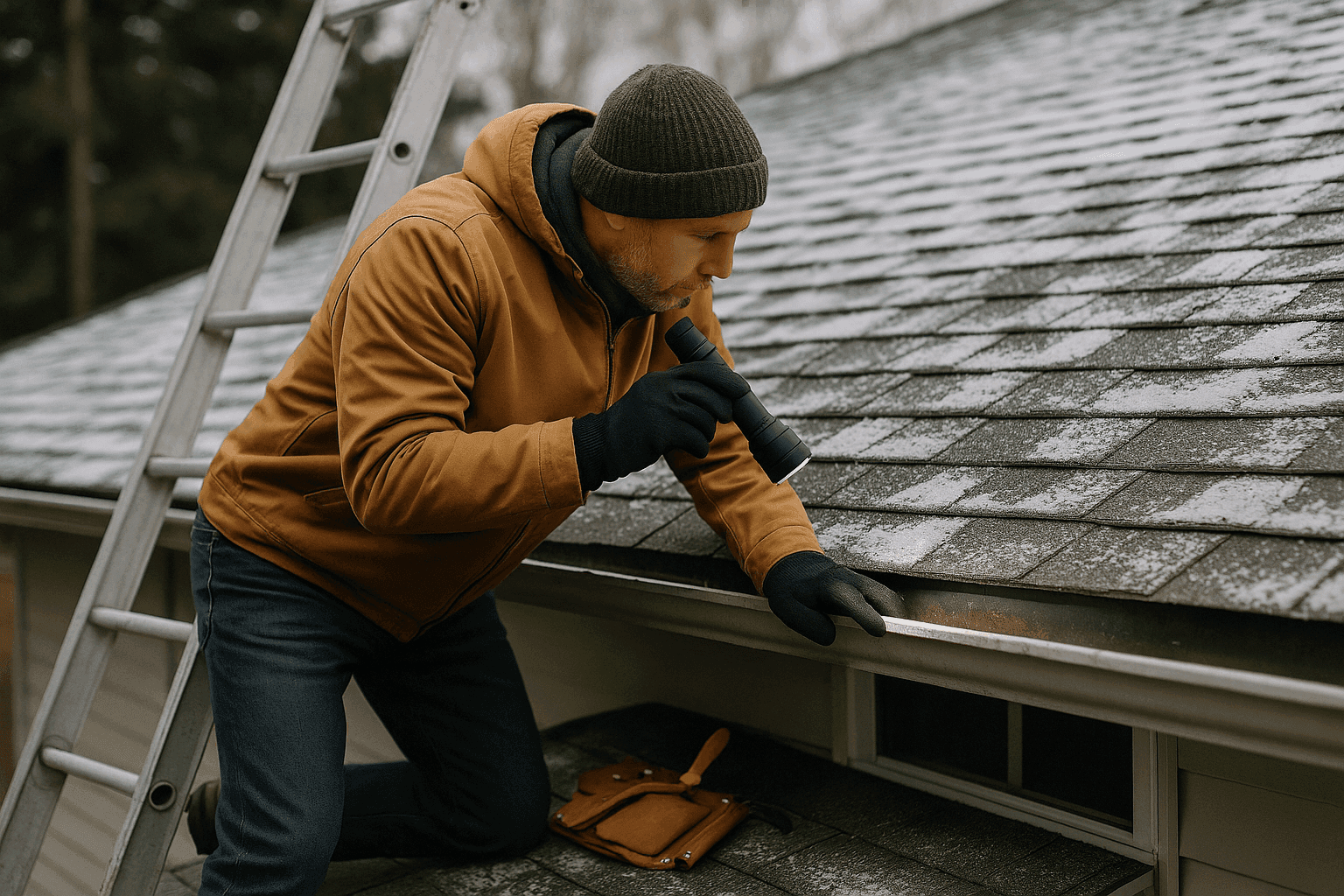
Before the first snowflake falls, take a close look at your roof. If you’re not comfortable climbing a ladder, binoculars from the ground can help. Here’s what to check:
- Shingles: Look for missing, cracked, or curling shingles. They’re weak spots where water can sneak in.
- Flashing: Pay close attention to the metal strips around chimneys, skylights, and vents. Bent or loose flashing is a common source of leaks.
- Gutters and Downspouts: Make sure they’re clear of leaves, twigs, and debris. Clogged gutters can overflow and dump water right next to your foundation.
- Sealants and Caulking: Check for gaps or cracks around roof penetrations. Old, brittle sealant won’t keep water out.
- Attic Insulation and Ventilation: Look for damp spots, mold, or frost in your attic. These are signs of poor ventilation or leaks.
- Roof Decking: If accessible, check for soft spots or sagging areas from inside your attic.
If you spot anything suspicious, take a photo and note the location. Small problems are easier—and cheaper—to fix before winter sets in.
Maintenance Tasks to Complete Before Winter
A little elbow grease goes a long way. Here’s what you should do to get your roof winter-ready:
Clean Gutters and Downspouts
Leaves and debris can block water flow, causing ice dams and gutter damage. Scoop out gutters by hand or use a gutter cleaning tool. Flush downspouts with a garden hose to make sure water flows freely.
Seal Leaks and Gaps
Check around chimneys, skylights, and vents for cracks. Use roofing sealant or caulk to close gaps you find. For bigger jobs, like damaged flashing, it’s best to call in a professional.
Check and Upgrade Insulation & Ventilation
Proper attic insulation keeps heat in your home and out of your attic. This helps prevent ice dams and lowers energy bills. Make sure attic vents are clear of insulation and debris. Good airflow is key.
Repair Minor Damage
Replace loose or missing shingles. Tighten or replace loose gutter hangers. Fix small holes or cracks in flashing. The sooner you address minor issues, the less likely they’ll turn into emergency roofing calls when the weather turns rough.
Trim Overhanging Branches
Heavy snow can cause branches to snap and fall on your roof. Trim back any limbs that hang over your home or business.
Inspect Skylights and Chimney Flashing
Check for cracked glass, broken seals, or loose flashing. Water loves to find its way in around these areas.
Emergency Preparedness Tips
Even with the best prep, winter can throw curveballs. Here’s how to be ready:
- Know Where to Look: After a storm, check your attic and ceilings for new stains or drips.
- Keep Emergency Supplies: Have a tarp, duct tape, and buckets handy in case you need a quick fix until help arrives.
- Don’t Wait: If you spot a leak, call for emergency roofing help right away. Water damage spreads fast.
- Stay Off the Roof: Snow and ice make roofs slippery and dangerous. Leave emergency repairs to the professionals.
At Independent Roofing, our team is on call 24/7 for emergency roofing needs. We know how to handle winter’s worst—safely and quickly.
How Pros Handle Winter Roof Calls
When you call in a professional for winter roof issues, here’s what typically happens:
- Assessment: We inspect the exterior and interior, looking for leaks, ice dams, and structural issues.
- Temporary Repairs: If conditions are dangerous, we’ll use tarps or sealants to stop water intrusion until a permanent fix is possible.
- Permanent Solutions: Once it’s safe, we replace damaged shingles, repair flashing, reinforce decking, or address insulation problems.
- Documentation: We provide photos and a detailed report for your records or insurance claims.
Our crews are trained to handle everything from small leaks to full roof replacements—even in the toughest winter weather.
Prevention & Maintenance: Protect Your Investment
Routine care is the secret to a long-lasting roof. Here are some habits that pay off year after year:
- Schedule Annual Inspections: A professional eye can spot trouble you might miss.
- Clean Gutters Twice a Year: Once in late fall, again in spring.
- Keep Attic Vents Clear: Good airflow prevents moisture buildup and ice dams.
- Use Eco-Friendly Options: Consider reflective coatings or recycled shingles for better performance and sustainability.
The National Roofing Contractors Association (NRCA) and the International Code Council (ICC) both recommend regular inspections and prompt repairs to extend your roof’s lifespan and improve safety.
Costs & Time Factors
Roof maintenance doesn’t have to break the bank. Here’s what to expect:
- Inspection: Usually takes 1–2 hours, depending on the size and complexity of your roof.
- Minor Repairs: Fixing a few shingles or sealing a small leak can often be done in less than a day.
- Major Repairs or Replacement: May take several days, especially if weather delays work.
- Emergency Calls: Fast response is key, but costs can be higher due to urgency and after-hours labor.
Investing in preventative care is almost always cheaper than dealing with water damage or structural repairs later on.
When It’s an Emergency
Not sure if your situation is urgent? Here are signs you need emergency roofing help:
- Active Leaks: Water dripping inside, especially during or after a storm.
- Sagging Roof: Visible dips or bulges in your roofline.
- Missing Shingles After a Storm: Exposed areas are vulnerable to further damage.
- Ice Dams Causing Leaks: Water backing up and entering your home.
- Large Branches or Debris: Anything heavy that’s fallen onto your roof.
If you’re ever in doubt, play it safe. Water damage can spread quickly and lead to mold, ruined insulation, and even electrical hazards.
Frequently Asked Questions
How often should I inspect my roof?
Twice a year—once in the fall, once in the spring. After major storms, give it another look.
Can I do winter roof maintenance myself?
You can clean gutters and check for obvious damage from the ground. For anything involving climbing or repairs, it’s safer to call a professional.
What’s the best way to prevent ice dams?
Good attic insulation and ventilation are key. Keep gutters clear and consider installing ice and water shield membranes if your area gets heavy snow.
How do I know if my attic is properly ventilated?
Look for evenly spaced intake and exhaust vents. In winter, your attic should be cold—not warm. If you see frost or condensation, you may need more ventilation.
Special Considerations for Roofs in Winter
- Flat Roofs: These are more prone to pooling water and leaks. Regular inspection is critical.
- Metal Roofing: Durable, but seams and fasteners can loosen over time. Check for rust or gaps.
- Tile and Shingle Roofs: Cracked or broken pieces should be replaced before freeze-thaw cycles start.
- Skylights and Chimneys: These are common leak sources. Make sure flashing and sealants are in good condition.
- Eco-Friendly Options: Reflective coatings and recycled materials can improve performance and reduce environmental impact.
Every roof is different. Age, material, and design all play a role in how it stands up to winter. If you’re unsure, a quick call can save you a season’s worth of stress.
Winter weather doesn’t wait. Get ahead of leaks, ice, and costly repairs—so you can stay warm and dry all season long.
Call Independent Roofing now — or reach us anytime at 888-218-7919 .